Search Engines vs Answer Engines: How AI Is Changing Your Digital Strategy | Spoton
SEOGEOIAStrategie digitale
Search Engines vs Answer Engines: How AI Is Changing Your Digital Strategy
Understand the difference between traditional search engines and AI-powered answer engines to adapt your online visibility strategy and prepare for GEO.
Published on March 6, 2026·by Equipe Sp0ton·5 min read
The rise of AI-powered answer engines is reshaping the rules of online visibility. If your entire digital strategy is built on traditional SEO, you may be missing a fundamental shift.
Search Engine vs Answer Engine: What's the Difference?
The Traditional Search Engine
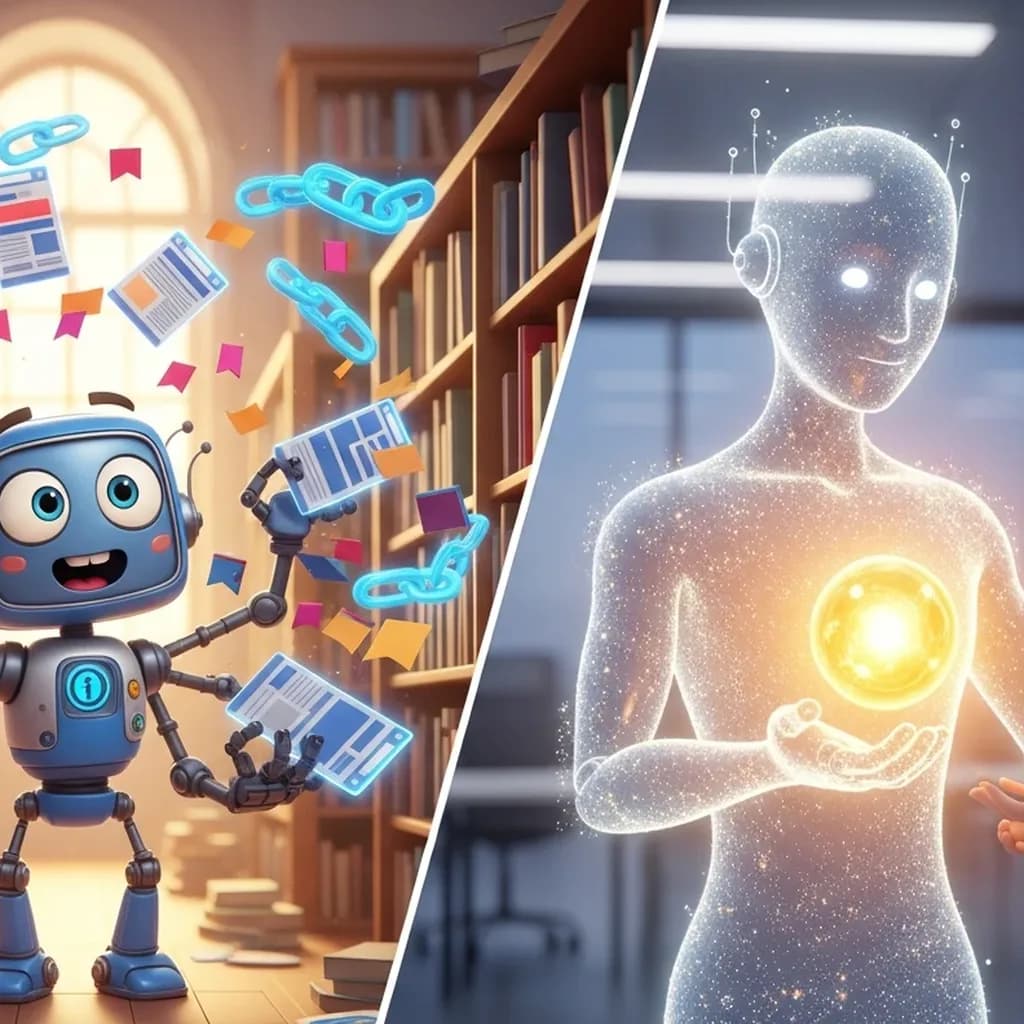
A search engine like Google, Bing, or Yahoo works on a simple principle: you type a query, and it returns a list of links. It's then up to you to click, read, compare, and synthesize the information yourself.
The model relies on:
Indexing web pages through crawlers
Ranking through algorithms (PageRank, relevance, authority)
Sponsored links that fund the service
SEO (Search Engine Optimization) to improve positioning
The Answer Engine
An answer engine, like Perplexity, ChatGPT Search, Google AI Overviews, or Claude, works differently: it directly synthesizes the answer to your question, citing its sources.
The model relies on:
Natural language understanding through generative AI
Multi-source synthesis: AI compiles multiple pages into a single response
Citations and sources: transparency about where information comes from
Dialogue: the ability to ask follow-up questions
Google AI Overviews: the US case that foreshadows the future
Since May 2024, Google has rolled out AI Overviews (formerly SGE, Search Generative Experience) across the United States. This system displays an AI-generated answer directly at the top of search results, above even the organic links.
The numbers that change everything
The impact on US user behavior is already measurable:
AI Overviews appear on approximately 47% of queries according to an Authoritas study across 100,000+ keywords
Organic click-through rates drop by 30 to 40% when an AI Overview is displayed (Seer Interactive data, 2025)
60% of Google searches end without a click on any result (SparkToro/Datos study), a figure that keeps rising
Gartner predicts a 25% decline in traditional search traffic by end of 2026, directly linked to AI answer adoption
In practice, millions of American users now routinely read Google's AI-generated answer without ever clicking through to a website. The search engine is becoming an answer engine.
As of today, Google AI Overviews is not yet available in the European Union. The Digital Markets Act (DMA) and GDPR create regulatory constraints that Google must resolve before a European rollout. But the launch is considered inevitable: the question is no longer "if" but "when".
This gives European businesses a window of opportunity to prepare before this transformation hits them directly.
Why This Distinction Is Strategic
The End of the Mandatory Click
With an answer engine, users often get what they need without visiting your website. This is the "zero-click" phenomenon taken to its extreme. Your content can be used as a source without generating any direct traffic.
From SEO to GEO
GEO (Generative Engine Optimization) is the emerging discipline focused on optimizing visibility within AI-generated responses. Unlike traditional SEO, GEO involves:
Being cited as a source: structuring content so it's easily identifiable and quotable
Topical authority: becoming a recognized reference on your key topics
Data clarity: providing factual, quantified, and up-to-date information
Semantic markup: using structured data (schema.org) to help AI understand your content
Two Complementary Strategies
SEO isn't disappearing, it's evolving. Here's how both approaches complement each other:
SEO (Search Engine):
Goal: Drive traffic
Format: Optimized pages, keywords
Metrics: Rankings, clicks, traffic
Content: Optimized for algorithms
Technical: Meta tags, links, speed
GEO (Answer Engine):
Goal: Be cited as a source
Format: Structured content, verifiable facts
Metrics: Mentions, citations, AI share of voice
Content: Optimized for AI comprehension
Technical: Schema.org, structured data, authority
How to Adapt Your Strategy Now
1. Structure Content for Both Worlds
Create content that works for both search engines and answer engines:
Answer questions directly in the opening lines
Use clear subheadings (H2, H3) that pose questions
Include lists and tables that are easy to extract
Cite your sources and provide quantified data
2. Build Topical Authority
Answer engines favor recognized sources:
Publish regularly on your areas of expertise
Earn mentions and citations from authoritative sites
Keep your information current and accurate
3. Optimize Technical Markup
Semantic markup helps AI understand and cite your content:
Implement Article, FAQ, and HowTo schemas
Use structured data for your products and services
Ensure strong accessibility (alt text, semantic HTML structure)
4. Monitor Your Presence in AI Responses
New tools are emerging to track your visibility in answer engines. Add these metrics to your marketing dashboard alongside your traditional SEO KPIs.
What This Means for Your Business
The transition from search engines to answer engines isn't a future event, it's already happening. Companies that prepare now will have a significant competitive advantage.
At Sp0ton, we help businesses navigate this transition by integrating SEO and GEO best practices directly into the solutions we build. Our AI orchestration approach helps you understand how different models interpret and present your content.
Conclusion
Search engines sent you visitors. Answer engines use your expertise to respond directly to questions. In both cases, content quality is the key, but the rules of the game are changing.
Adopting a combined SEO + GEO strategy is no longer optional: it's the condition for staying visible in a world where AI reformulates everything before presenting it to the user.
Want to audit your visibility in AI answer engines? Contact us for a personalized assessment.